Shedding the protective shell of the safari vehicle and stepping onto the earth fundamentally alters the experience of the African wilderness. Guided walks, whether short nature strolls or multi-day bush safaris on foot, connect the visitor to the environment in a way that driving simply cannot achieve. By moving at the pace of the landscape, the focus shifts from simply sighting megafauna to appreciating the intricate web of life, forcing all senses to become alert to the nuances of the ecosystem—the scent of crushed wild herbs, the sound of a hidden bird, or the feel of ancient soil underfoot.

It is essential to differentiate between a Nature Walk and a full Walking Safari on Foot. A nature walk is typically a gentle, two-hour educational excursion, often conducted around the camp perimeter or in areas known to be safe from dangerous large game, like certain riverine forests or conservancies. The guide, an armed ranger or a specialized naturalist, uses this time to illuminate the ‘small five’: insects, botany, medicinal plants, birdlife, and the art of tracking (spoor). These walks are about the microcosm, uncovering the hidden narratives written in the dust, such as interpreting the territorial scratch of a leopard or the flight pattern of a dung beetle.

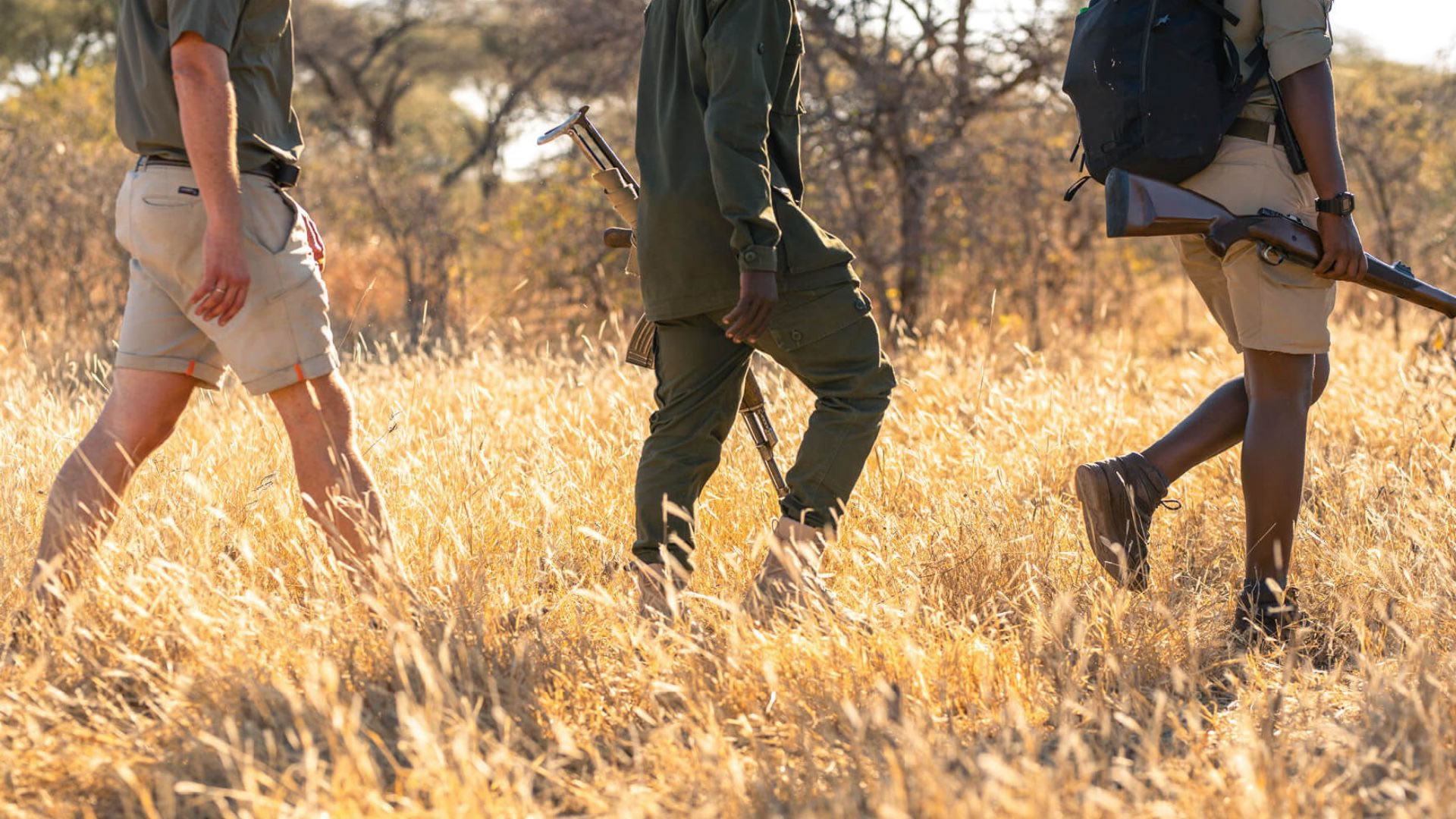
In contrast, a Bush Safari on Foot is a far more intense and immersive expedition. This activity is a core, dedicated safari experience, often lasting half a day or spanning multiple days with overnight stays in fly camps. The primary objective is to actively track and approach large game, including the Big Five, emphasizing the excitement and vulnerability of being an equal participant in the landscape. These walks demand a higher level of fitness, silence, and, crucially, a near-absolute obedience to the highly trained, armed guides who operate with strict safety protocols designed to prioritize the welfare of both the participants and the animals.

Southern Africa holds the historical prestige as the birthplace of the modern walking safari, with Zambia’s South Luangwa National Park universally celebrated as the premier destination for this activity. The methodology perfected here involves expert guiding teams who use wind direction and terrain to approach animals safely and discreetly. Other countries, including Zimbabwe (Mana Pools, famous for walking among elephants) and South Africa (Kruger’s private concessions), offer extensive multi-day trails. Here, the experience is rugged, authentic, and often involves covering significant ground. The flat riverine woodlands and open plains of Southern Africa provide excellent sightlines for spotting large game, making the adrenaline-pumping moments of encountering a buffalo herd or an elephant bull on foot a regular occurrence.

While walking safaris have historically been less prevalent in East African National Parks (like Serengeti and the main Mara Reserve), they are flourishing in the surrounding private conservancies in Kenya (Laikipia and the Mara Conservancies) and the vast wildernesses of Southern Tanzania (Ruaha and Nyerere National Parks). In Kenya, walks are often led by local Maasai or Samburu guides, adding a profound cultural layer. These guides share traditional knowledge of the land, demonstrating how their communities have safely coexisted with wildlife for centuries.
In Tanzania, destinations like Arusha National Park offer a unique blend of walking safaris among plains game and forest trekking near Mount Meru. The true walking wilderness of East Africa, however, lies in the remote and often swampy areas of the southern circuit, where walking allows for unmatched access to ecosystems inaccessible by vehicle, offering the chance to track African Wild Dogs or approach large herds of buffalo and elephant that inhabit the dense bush.